How Do Trees Store Carbon? The Connection Between Trees, Wood and Climate Change
How Do Trees Store Carbon? The Connection Between Trees, Wood and Climate Change
When we think about trees, we usually think about oxygen. But trees do something else that is just as important for our planet: They take carbon dioxide from the atmosphere and turn it into wood. This is one of nature's remarkable ways of storing carbon. But what happens to that carbon when a tree becomes a wooden product? Does wood continue to store carbon? And can choosing wooden products actually help reduce our environmental footprint? Let's start with the science.
How Do Trees Absorb Carbon Dioxide?
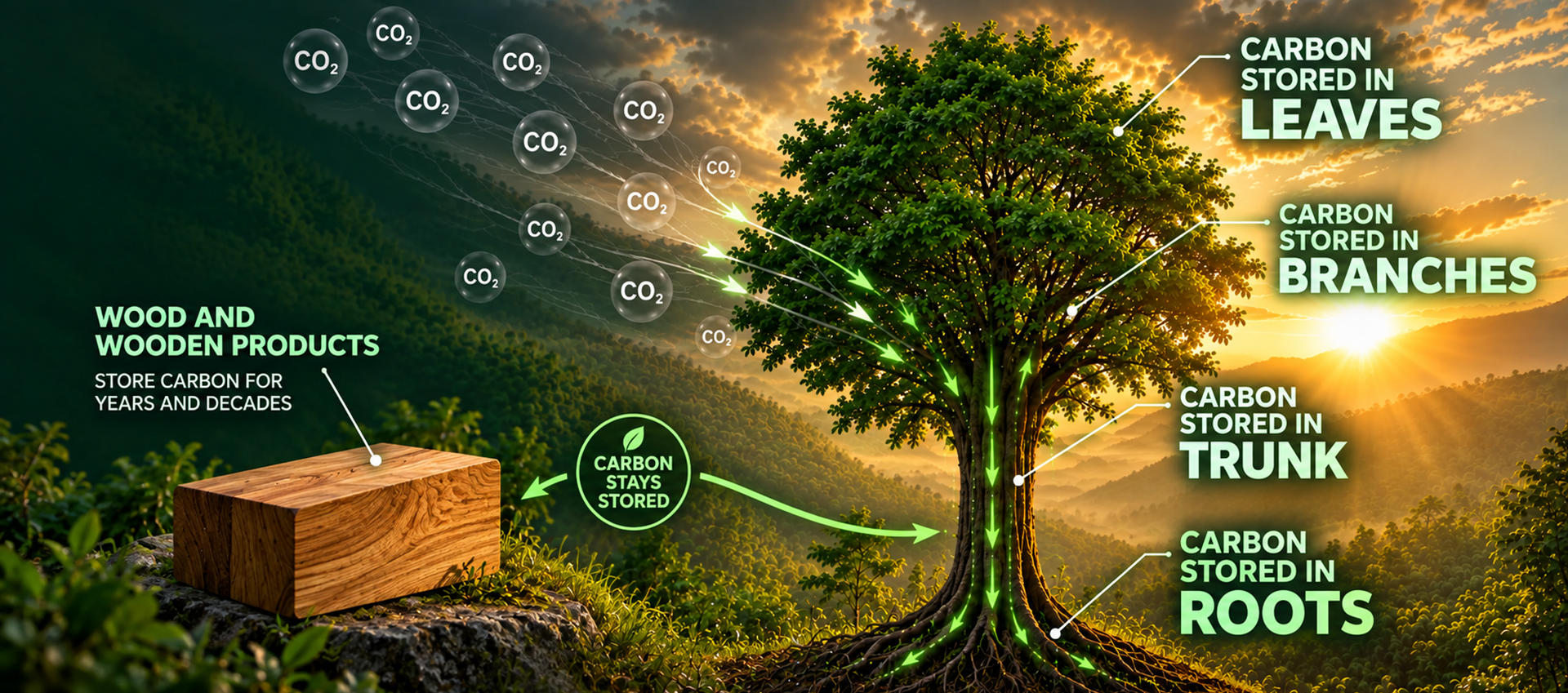
Trees absorb carbon dioxide (CO₂) from the atmosphere through tiny openings in their leaves. Using sunlight as energy, they combine carbon dioxide with water through a process called photosynthesis. The simplified process is: Carbon dioxide + water + sunlight → sugars + oxygen The oxygen is released back into the atmosphere, while the carbon becomes part of the tree. Those carbon-based compounds are eventually used to build the tree's:
- Trunk
- Branches
- Roots
- Leaves
- Bark
- Wood
So, in a very real sense, some of the carbon in a tree once existed as carbon dioxide in the air. As the tree grows, it takes more carbon from the atmosphere and incorporates it into its biomass.
How Does Carbon Become Wood?
This is where the process becomes fascinating. The sugars produced during photosynthesis are used by the tree to create complex organic compounds, including cellulose, hemicellulose and lignin — the structural materials that give wood its strength. Carbon therefore moves through a chain: CO₂ in the atmosphere → photosynthesis → sugars → plant tissue → wood This process is known as carbon sequestration. A growing forest can therefore function as a carbon sink, taking carbon dioxide from the atmosphere and storing carbon in trees, roots, dead wood and soils. But there is an important point to remember: Not all of the carbon captured by a forest stays permanently stored. Trees eventually die, burn or decompose, and some of their stored carbon returns to the atmosphere. Which brings us to an interesting question.
Does Wood Continue to Store Carbon After a Tree Is Cut?
Yes. When timber is turned into a long-lasting product such as furniture, a building component or a wooden utility product, much of the carbon contained in that wood remains in the product. Instead of being immediately released back into the atmosphere through decomposition, that carbon can remain stored for years or even decades. This is known as the harvested wood products carbon pool. The longer a useful wooden product remains in service, the longer the carbon can potentially remain stored in that product. Think about an old wooden table that has been in a family home for 30 years. The tree captured carbon decades ago. That carbon became part of the wood. And some of that carbon is still physically present in the table today.
Do Wooden Products Reduce Carbon Footprint?
This question needs a more nuanced answer. A wooden product is not automatically a low-carbon product. The environmental impact depends on where the wood comes from, how it is processed, how long the product lasts, what it replaces and what happens to it at the end of its life. However, responsibly sourced and durable wood products can provide two important environmental benefits.
1. Carbon storage
Carbon that was captured by the tree can remain stored in a long-lasting wooden product.
2. Material substitution
Wood can sometimes replace materials whose production requires significantly more energy and generates more greenhouse-gas emissions. For example, depending on the application and how the materials are produced, wood can substitute for certain plastic, metal or other manufactured products. This is called the material substitution effect. Therefore, when considering the climate impact of a wooden product, we shouldn't ask only:
“Is it made of wood?”
We should ask:
“Where did the wood come from, how long will the product last, and what material is it replacing?”
Does Using Wood Mean We Should Cut Down More Trees?
No. This is one of the most important misconceptions to address when talking about wood and sustainability. The climate benefits associated with wood depend heavily on responsible forest management and sustainable sourcing. Protecting existing natural forests and biodiversity remains essential. Using wood sustainably does not mean encouraging unnecessary deforestation. In fact, one of the most interesting sources of wood is material that has already been harvested and used. That is where reclaimed wood comes in.
Why Reclaimed Wood Is Especially Interesting
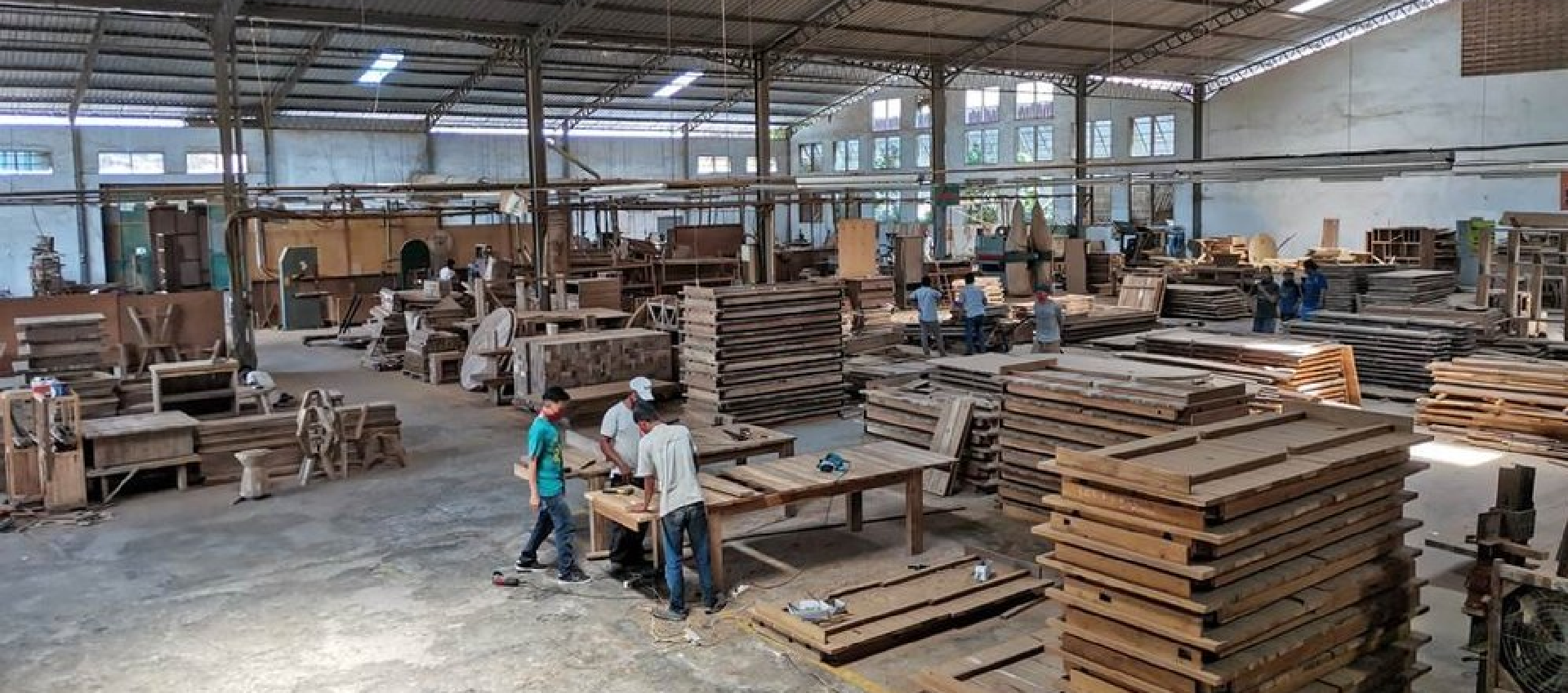
Imagine an old wooden pallet. The tree that produced that wood may have been growing for decades. The carbon was already captured. The pallet was manufactured, transported and used — and eventually it may be considered waste. But the wood itself hasn't stopped being useful. Instead of throwing it away or sending it for disposal, it can potentially be: Recovered → sorted → repaired → redesigned → reused A reclaimed wooden product therefore extends the useful life of material that already exists. At Jungle Bound, this is an important part of what we do. We work primarily with reclaimed and repurposed wood, including wood recovered from old wooden boxes, pallets and demolition sources. The material is dismantled, sorted and prepared before being turned into new products. We don't see old wood simply as waste. We see it as a material with another life left in it.
Why Product Longevity Matters
If we're serious about sustainability, we need to move beyond the idea that the material alone determines whether a product is sustainable. Consider two wooden products. One is poorly made and thrown away after a year. The other is well designed, durable and used for 20 years. They may both be made from wood, but their environmental stories are very different. A durable product can:
- Keep carbon stored for longer
- Reduce the need to manufacture replacements
- Make better use of the resources already invested in the material
- Potentially be repaired, reused or repurposed
This is why durability is an important part of sustainable product design.
What Happens to the Carbon at the End of a Wooden Product's Life?
Eventually, every wooden product reaches the end of its useful life. But even then, there can be opportunities to extend its material life. A wooden product might be: Repaired → reused → refurbished → repurposed → recycled Only after these possibilities have been exhausted does disposal become the final option. The exact carbon outcome depends on what happens to the wood at the end of its life. For example, decomposition or burning can return carbon to the atmosphere, while continued reuse can extend the period during which that carbon remains stored. This is why a circular approach to wood is so important.
Trees Capture Carbon. We Can Help Keep It in Use.
Trees have spent years doing something extraordinary. They have taken carbon dioxide from the atmosphere and transformed it into something physical — wood. When we use that wood responsibly and make durable products from it, we can extend the useful life of that stored carbon. And when we choose reclaimed wood, we can give existing material another useful life without requiring new timber for that particular product. This doesn't mean every wooden product is automatically sustainable. It means that how we source, design, manufacture, use and dispose of a product matters. At Jungle Bound, this is the philosophy behind our approach to wood. We believe sustainability isn't only about finding a new material. Sometimes, it's about looking at the materials we already have and asking: “Can we give this another life?” Because a tree has already done the hard work of capturing carbon. Our responsibility is to make the most of that material.
The Simple Takeaway
A tree takes carbon dioxide from the air and turns some of that carbon into wood. When that wood becomes a durable product, some of the captured carbon can remain stored for years or decades. And when we reuse existing wood, we can extend the life of a material that has already been produced. Trees capture carbon. Wood stores it. Good design keeps the material in use. And sometimes, the most sustainable material isn't a new material at all. It's the one we already have.
-
 August 9th, 2026
 -
 June 29th, 2026
 -
 May 4th, 2026