
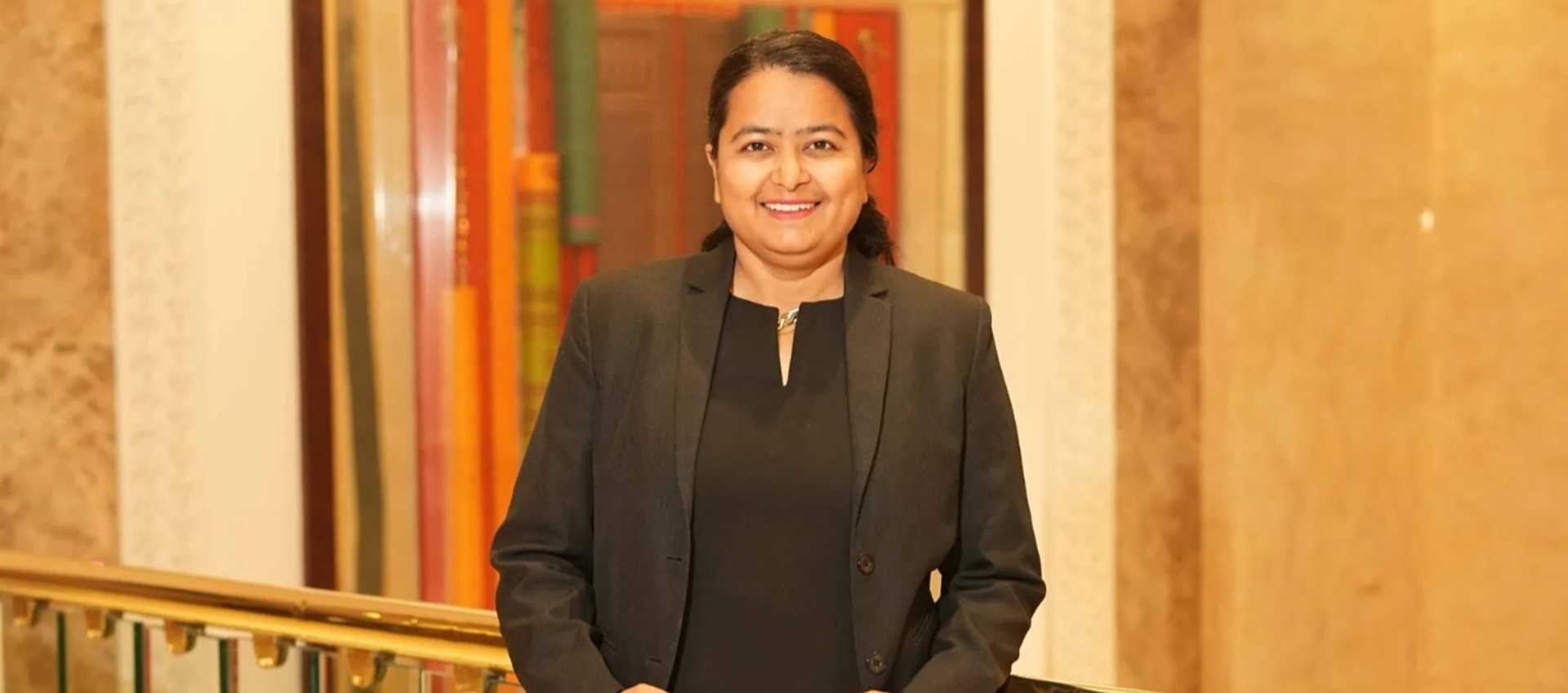
Pratiksha Shelke on Building What’s Real
I first connected with Pratiksha through my husband. She was a junior in his grad school cohort, specializing in automotive research. I’ve known quite a few mechanical engineers over the years, mostly through him, and most of them happen to be guys, because women are still very much a minority in the field. During our engineering days, the mechanical class had just 4 girls in a class of 400. Pratiksha mentioned something similar when we talked, and how she chose mechanical engineering because she was genuinely in love with machines, not because it was the default branch girls picked. And she still lives that passion today. She left a product development role at Jeep in the US to move back to India and start a manufacturing unit, making sustainable products out of reclaimed wood and bamboo, choosing the hardest possible version of entrepreneurship: physical products, physical machines, physical supply chains. She has an idea in the morning, and by evening, she’s holding the product. That’s what gets her through the daily reality of running a factory floor in Pune. Loving it and making it work, imperfectly, stubbornly, and with sawdust on her hands. Founders talk about building. Pratiksha actually builds, and you can hold what she makes.
She runs Jungle Bound , a manufacturing unit working in reclaimed wood and bamboo, producing everything from bulk corporate orders to artisanal retail products. She got a government loan without a guarantee, survived her machines getting caught in a literal cyclone, and pivoted her entire business model when reality didn’t match the plan, all within six years of moving back from the US.
The disconnect that started everything
Pratiksha was working at Jeep after her Master’s in the US, doing what many mechanical engineers do in automotive, reducing vehicle weight for better fuel efficiency, optimizing body-in-white structures. On paper, she was contributing to sustainability, but the longer she stayed, the more she felt a gap opening up between what she was doing every day and what she actually cared about. “I felt a big disconnect,” she says. “We are adding to the problem and not solving it.” That feeling sat with her for a while before she did anything about it. She started studying social entrepreneurship, ecology, and climate change through online courses while still in the US, playing with business models for two or three years, composting and recycling and doing what an individual can do on their own. But she knew somewhere that it wasn’t going to be enough. COVID gave her the push she needed. She’d been planning to save for another year or two before moving back to India, and the pandemic more or less made the decision for her.
From toothbrushes to a full manufacturing unit
When she first moved back in 2020, her plan was bamboo toothbrushes, trending, consumable, eco-friendly, the kind of product that makes sense on paper. Then she did the ground research. “I studied the market, the manufacturers, the process. I realized there is a smaller market and there is already enough competition from imports,” she explains. “And my field was in product development. I would have been bored to just do one product for 15 years.” So instead she built something that actually used her engineering background properly: a manufacturing unit with multiple machines and processes, flexible enough to make a variety of products. It took a full year of research before she landed on reclaimed wood and bamboo as the materials that fit.
The PPT that convinced her parents
Pratiksha’s mother is a government school teacher and her father is a lawyer, both well-educated but with no business background at all, which makes her the first entrepreneur in her family. So how did she convince them to back a financially risky bet on a manufacturing startup? She made them a presentation. Quotations, product samples, a PowerPoint, an Excel sheet with the numbers, as if they were investors sitting across a boardroom table. “They had to be convinced about the business,” she says matter-of-factly. Her parents had supported her through every unconventional choice already, and backing a girl through a mechanical engineering degree is itself a big deal for an Indian family. But this one involved real financial risk and walking away from a flourishing US career. They were scared, she admits, but once they saw the plan laid out in front of them, they went all in, time, money, everything.
The cyclone that hit her machines
Getting funding took the longest. She applied for a government loan and got it without a guarantee, something she brings up because she wants more founders to know it’s possible, and she also received the subsidies available to Indian startups. The real chaos, though, was the machines. Some parts were imported, some were sitting in Karnataka, some in Madhya Pradesh, and then the second wave of COVID hit and slowed everything down further. As if that wasn’t enough, two cyclones hit Maharashtra around the same time. “My machines were in the sea when the cyclone hit,” she says. “Because of the salt water, they were rusted like anything.” They spent days repairing the damage. She laughs about it now. “When I look back it was not that big of a problem. It just got delayed and it was such a headache. But we went through it.”
Why she pivoted to bulk orders
She launched her website expecting fireworks. “I thought I’m launching a dynamite,” she admits. “But nothing happened. Even the people around me did not order from the website.” Sound familiar, anyone? For six months she struggled to get any traction on the retail side, while bulk inquiries kept trickling in from businesses instead. She looked at her factory, machines sitting idle, capacity going to waste, rent and electricity due every month, and made the practical call. “My machines should be running continuously. People should have regular work. I should be able to pay my rent, my electricity,” she thought. “So my decision was to mainly utilize the capacity that I had built.” She shifted to B2B bulk orders and kept the B2C dream on the back burner, and it worked. The factory runs steadily now, broke even last year, and might turn a profit this year. The B2C brand is still where she wants to go eventually, but building a consumer brand properly takes marketing money she doesn’t have yet. As she puts it, “Being a manufacturer, having bulk orders from B2B clients, that is better for business right now. The B2C part requires a lot of marketing.”
“Sustainability is an add-on”
Most sustainability founders learn this the hard way, if they learn it at all. “The product has to be functional. The product has to be good. Being eco-friendly is a plus point, it is not the main point for most customers,” Pratiksha says. She’s pragmatic about it rather than bitter. The products sell mainly because they’re beautiful, reclaimed wood looks luxurious and antique and different, and that alone brings in customers who might not care about sustainability at all. The eco-friendliness ends up being a bonus they discover later, not the reason they bought it. She also pushes back on the idea that nobody cares. “When I go to exhibitions and I meet customers face to face, I get surprised about how aware they are and how much they care. We assume people don’t care, but people do.”
The biggest mistake: trying to do it all
For the first two or three years, Pratiksha did everything herself, design, marketing, CNC programming, supervision, quality control, and whenever workers were absent, she’d get on the machines herself too. “That was a huge mistake,” she says looking back. She eventually hired a designer and a supervisor who handles quality, deadlines, and logistics. “I used to call the delivery driver. I used to do all of that when I should not have to.” These days she spends her time on business development, networking, and something she didn’t expect to matter as much as it has: writing.
The blog that brings in her best leads
At least once a week, Pratiksha writes a blog about environmental awareness, eco-friendly products, or woodworking, partly because she enjoys writing and partly because it works. “People that are actually searching for eco-friendly products or eco-friendly manufacturers, they do it on Google or Gemini or ChatGPT,” she explains. “For those platforms to suggest Jungle Bound, I have to have good authority over the subject.” Decision-makers in the environmental space find her blogs, land on the website, and reach out for bulk orders, with no paid ads and no commission fees to anyone. “The people that are reading these blogs are decision-makers in the environmental field. For them, I have to have good value content.”
“Sir ahet ka?” at her own factory
On being a woman in manufacturing, a field that has stayed male dominated for as long as anyone can remember, Pratiksha’s answer is a bit measured. During her engineering studies and her time at Jeep, she says it wasn’t really a big deal, and in business, once people know her skills and capabilities, it isn’t either. But there are moments in between that still sting. “People come to my factory and ask me, ‘Sir ahet ka?’” Basically, where’s the boss, assuming the boss has to be a man. “Initially I used to get offended. Now I say I don’t have time to convince or change that thought process or challenge their beliefs.” She still finds it offensive, being asked that in her own factory, but she’s stopped spending energy on it. She also points out that women are running critical departments in manufacturing units across India, quality, sales, admin. “They are just not getting enough credit.”
Only crazy people start a business
When I ask about the uncertainty she still carries, she doesn’t pretend it’s gone. “We do still get some low months and some ups and downs. I am hopeful and I am positive. But it is a bit scary. Always.” She’s candid about what she’d do differently too. Start the B2B side sooner. Get a business mentor earlier. Buy machines one at a time instead of all at once. Nobody in her family had been through this before, so she had to figure it out on her own. “Not for the faint-hearted,” she says about building a sustainable manufacturing business, and then adds with a laugh, “Also not for very smart people. Only crazy people will start a business.”
Full Circle
Something lights up in Pratiksha when she talks about the speed of it, an idea in the morning, a finished product by evening. “That is sci-fi level crazy,” she says. She means it literally, using her CNC machines, her CAD software, and the engineering training from her product development days to actually make things instead of just thinking about them. It is the path she chose on purpose, still a work in progress, not perfect, but hers. Six years in, with a factory full of machines, a team she trusts, and a blog that brings in better leads than any ad campaign could, Pratiksha is still at it. Still building, sawdust and all.
If you'd like to discover more inspiring women entrepreneurs, explore the incredible stories featured on The Daughters of India.
-

How Do Trees Store Carbon? The Connection Between Trees, Wood and Climate Change
September 13th, 2026 -
 August 9th, 2026
 -
 May 4th, 2026

