Eco-Friendly Packaging of Bulk Gifting Items for Corporate Gifts
Corporate gifting is no longer just about sending out hampers—it is a reflection of what a company stands for. Today, businesses are being judged not only by what they gift, but how they gift it. Eco-friendly packaging has quietly become a powerful statement of intent: a commitment to sustainability, responsibility, and thoughtful growth.
Most conventional packaging—plastic wraps, thermocol fillers, laminated boxes—creates a huge environmental burden. These materials are rarely recycled and often end up in landfills or oceans, taking hundreds of years to decompose. For companies sending gifts in bulk, the impact multiplies dramatically.
A single festive campaign can generate tonnes of non-biodegradable waste. This isn’t just an environmental issue anymore; it’s a brand perception problem. Switching to eco-friendly packaging changes that narrative. Using materials like recycled paper, corrugated boards, natural fabrics, jute, or even agricultural by-products significantly reduces carbon emissions.
On average, sustainable packaging can cut carbon footprint by 30–70% depending on materials and sourcing. When done locally, the impact improves further by reducing transportation emissions and supporting regional artisans. Options like molded pulp trays (made from waste paper), honeycomb paper wraps instead of bubble wrap, and bagasse-based packaging (from sugarcane waste) are increasingly being adopted for bulk dispatches because they are both protective and biodegradable.
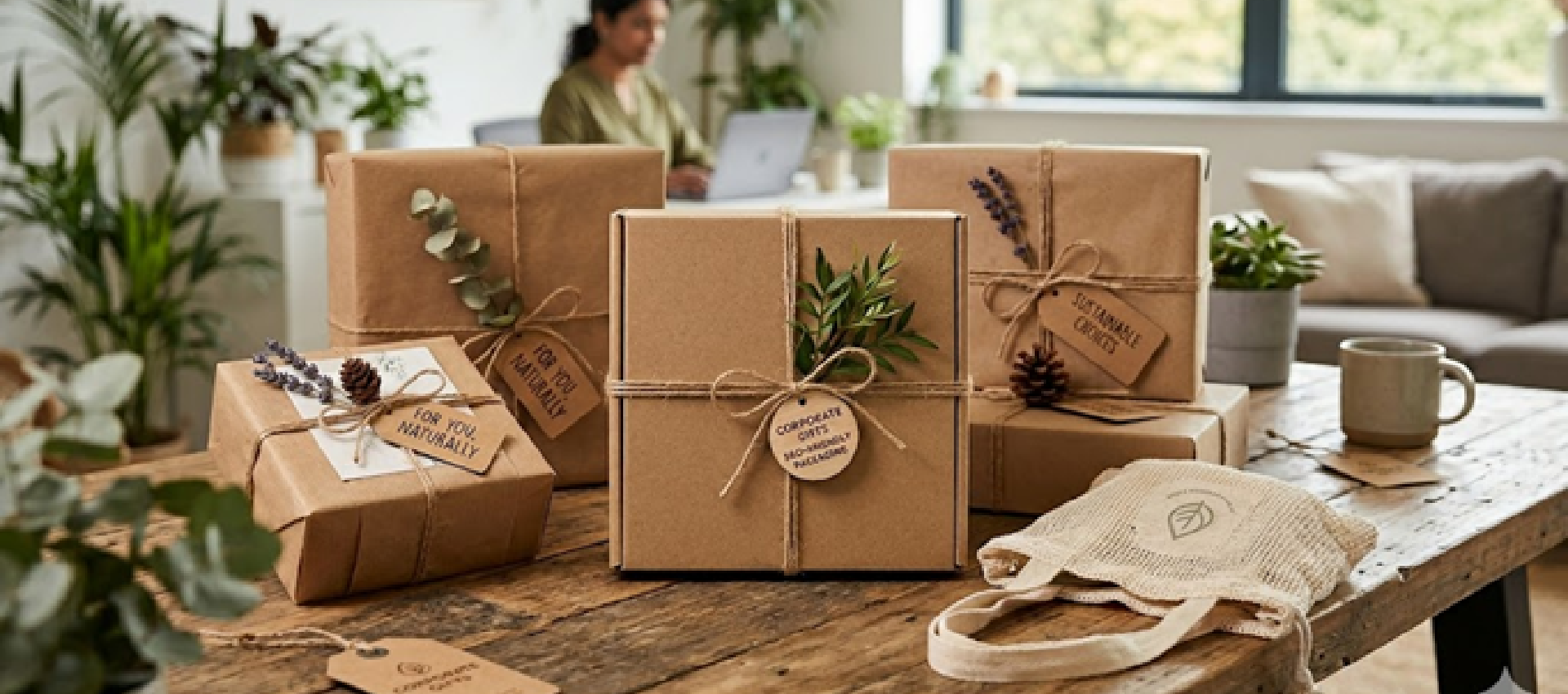
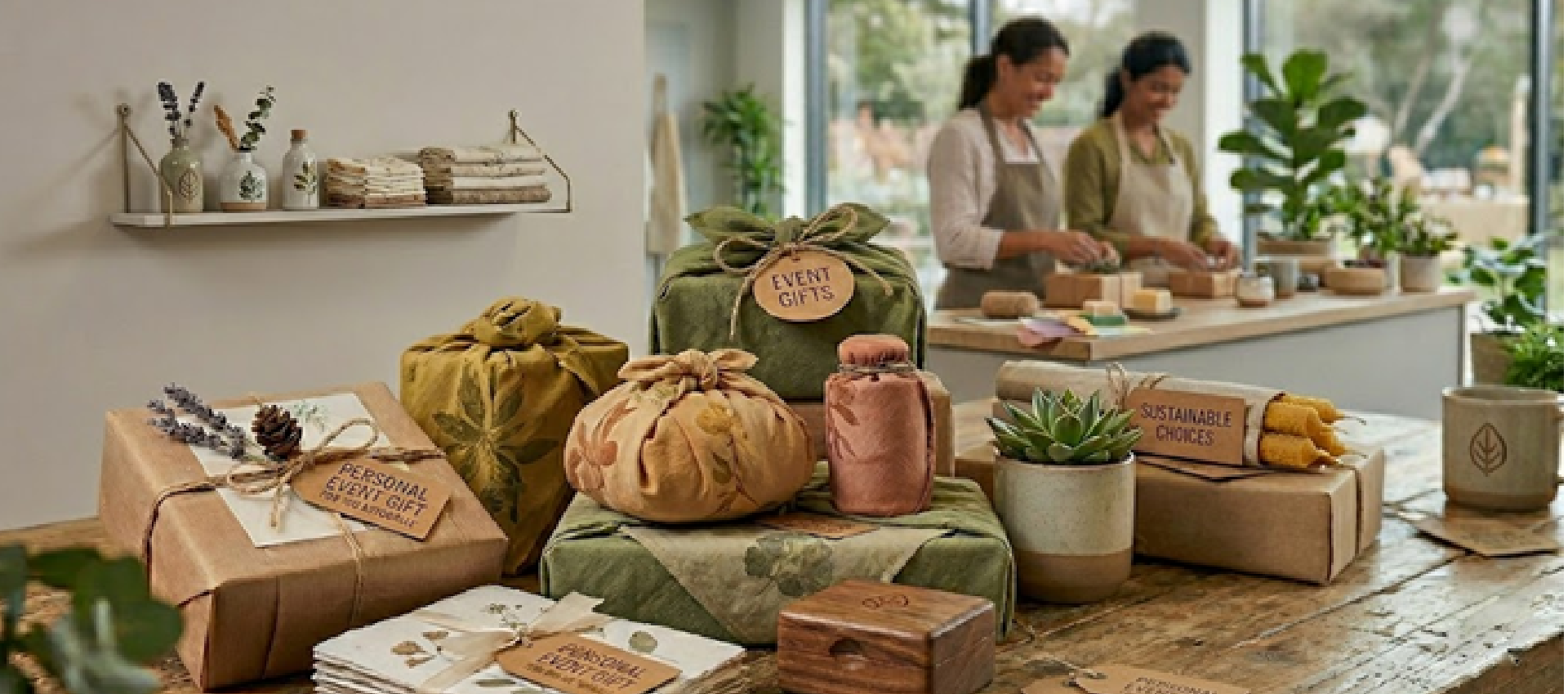
There’s also a misconception that eco-friendly means dull or “rustic-only.” In reality, sustainable packaging can look incredibly rich and premium. Clean textures, earthy tones, minimalistic branding, laser engraving, and thoughtful detailing often feel more sophisticated than glossy plastic finishes. A well-designed kraft box with subtle branding can feel far more luxurious than a shiny laminated one. Add elements like debossed logos, natural dyes, screen printing, or fabric layering, and the entire presentation becomes premium without being wasteful. Another powerful advantage is the personal touch.
Eco-friendly packaging naturally allows for customization—handwritten notes, reusable elements, or even storytelling through design. When recipients open such gifts, they feel a sense of warmth and authenticity. It doesn’t feel mass-produced; it feels considered. Adding QR-coded story cards printed on seed paper (which can be planted later), or including artisan tags explaining the material origin, builds a deeper connection between the brand and the recipient.
From a corporate standpoint, this directly feeds into brand building. Clients, employees, and partners increasingly value companies that act responsibly. Sustainable gifting communicates that your company is forward-thinking and aligned with global values. It strengthens trust, enhances recall, and even differentiates you in competitive markets. It also aligns with ESG goals and sustainability reporting, which many organizations are now prioritizing.
Gifting Solutions by Budget
1. Budget-Friendly (Mass Scale Efficiency)
Simple corrugated boxes, recycled paper wraps, and paper fillers. Add branding through stamps or single-color prints. Even at a low cost, clean design and uniformity can make the gift look elegant. Ideal for large employee distributions or event giveaways.
Additional options include:
- Foldable kraft mailer boxes (reduce storage and logistics cost)
- Paper bands instead of full outer packaging
- Shredded paper or agri-waste fillers instead of foam
- Newspaper-style wraps with branded stamps
- Simple die-cut boxes without glue (easy to assemble and recycle)
2. Mid-Range (Balanced Impact & Aesthetics)
Kraft rigid boxes, cloth wraps (like cotton or jute), and laser-cut branding elements. Include reusable packaging like tote bags or fabric pouches. This range strikes a strong balance between cost, usability, and perceived value.
Additional options include:
- Drawer-style rigid boxes made from recycled board
- Canvas or muslin bags with screen printing
- Cork sheets or bamboo fiber wraps for a unique texture
- Molded pulp inserts to hold products securely
- Paper tubes for cylindrical packaging (great for bottles, candles, etc.)
- Combination packaging (box + fabric wrap) to enhance layering
3. Premium (High Recall & Experience)
Handcrafted wooden boxes, engraved lids, magnetic closures, or layered packaging with multiple textures. Combine with natural finishes like beeswax polish or fabric lining. These gifts feel timeless and are often reused, extending brand visibility far beyond the occasion.
Additional options include:
- Wooden boxes with natural polish or stain finishes
- Sliding lid wooden crates with branding engraved or UV printed
- Leatherette alternatives (plant-based) for a luxury feel
- Multi-layer unboxing experiences using paper compartments
- Glass jars or ceramic containers packed in molded pulp with outer boxes
- Reusable baskets made from cane, bamboo, or water hyacinth
In the end, eco-friendly corporate gifting is not just about reducing harm—it’s about creating value. It aligns your company with a larger purpose, enhances how your brand is perceived, and turns every gift into a statement of responsibility and care.
-
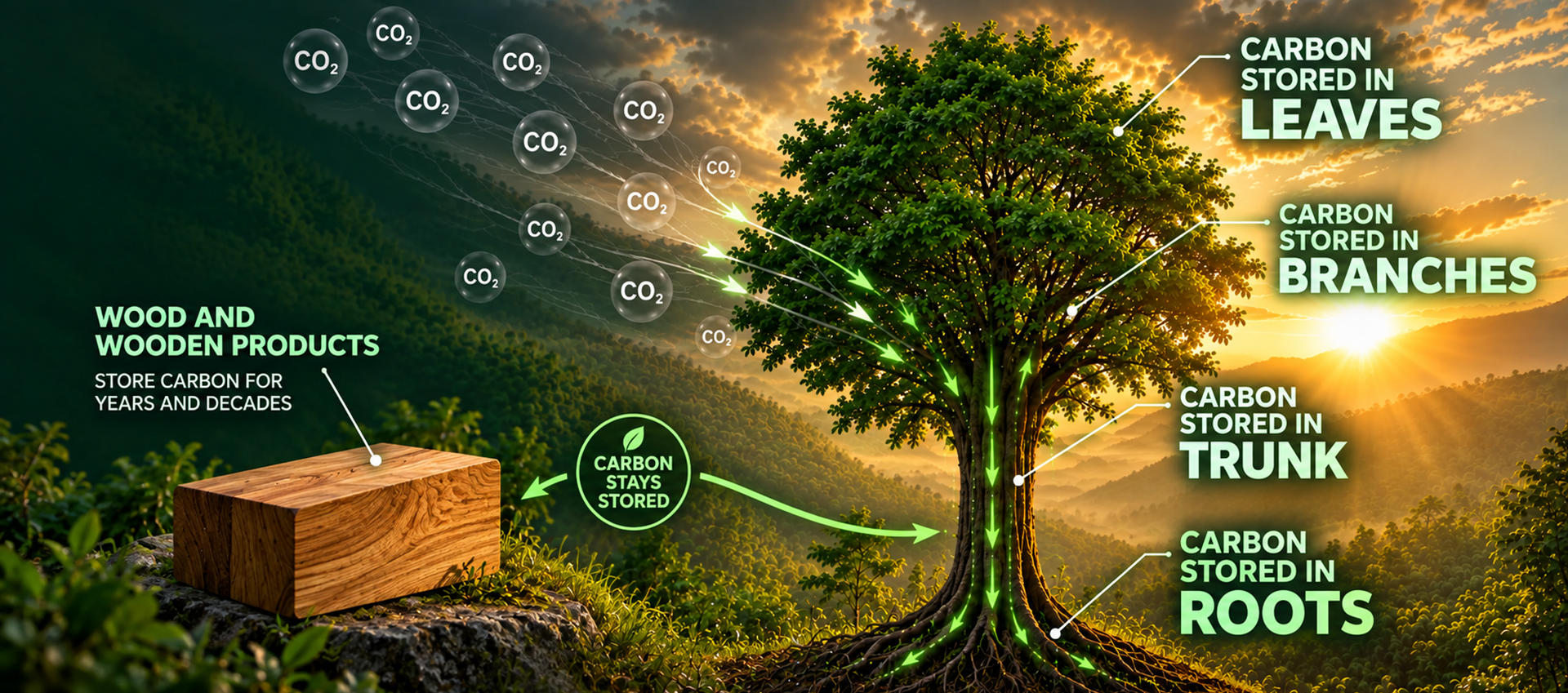
How Do Trees Store Carbon? The Connection Between Trees, Wood and Climate Change
September 13th, 2026 -
 August 9th, 2026
 -
 June 29th, 2026
 -
 May 4th, 2026